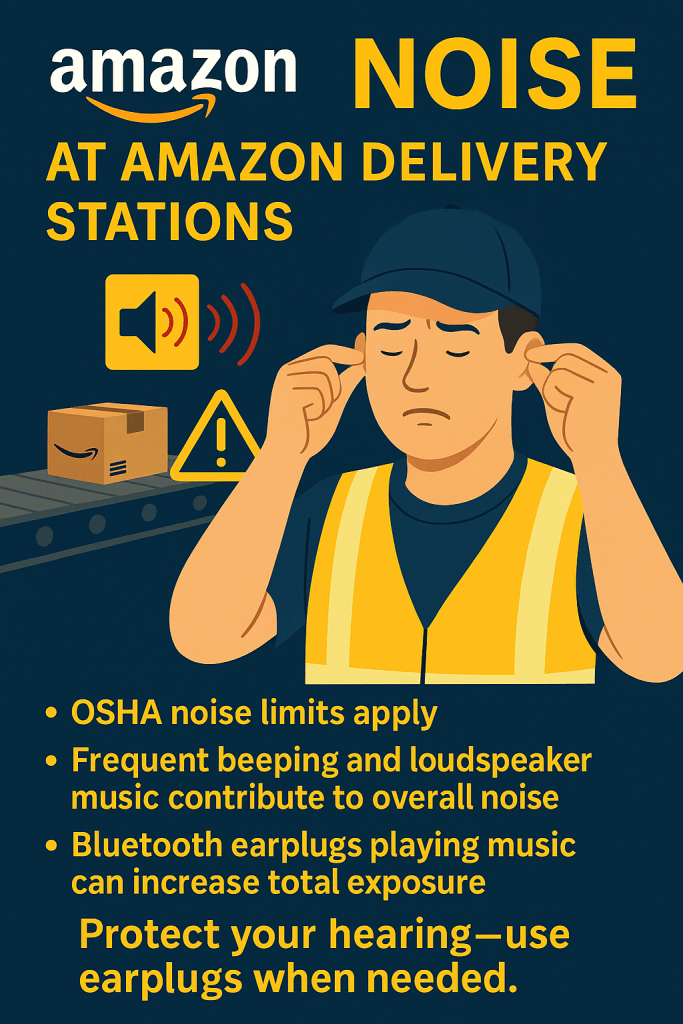
Amazon delivery stations are busy places, filled with machinery, conveyors, and frequent loud warning beeps to keep people safe. They also often play music or announcements over loudspeakers, adding even more background noise.
If you’ve noticed the noise level bothering you—especially on days you’re tired—you’re not being sensitive. Noise in warehouses is a real occupational hazard.
⚖️ OSHA Noise Rules
U.S. workplaces must follow OSHA’s noise standard:
Permissible Exposure Limit: 90 dB(A) over 8 hours. Action Level: 85 dB(A) average over 8 hours triggers a required Hearing Conservation Program that includes: Noise monitoring Free annual hearing tests Free earplugs or earmuffs Worker training
OSHA cares about total noise exposure, from all sources combined—including machinery, alarms, and loudspeaker music.
🎧 Bluetooth Earplugs and Personal Music
Many facilities allow or encourage Bluetooth earplugs for workers. While these can block some noise, they can also make things worse if workers turn up the music to drown out the environment.
Audio from Bluetooth devices adds directly to the total sound hitting your ears. Without volume limits, these can push your exposure over safe levels.
Some facilities use volume-limiting models to avoid this risk, but not all do.
🔊 Delivery Station Realities
Common noise sources you might deal with:
Frequent loud beeping from machines for safety alerts. Loudspeakers playing music or announcements. Conveyor systems and sorting machinery.
All of these add together to create the ambient noise level. Even if none alone seems dangerous, the total average can cross OSHA’s threshold.
✅ Employer Responsibilities
Amazon, like any employer, must:
Monitor total workplace noise. Keep alarms only as loud as necessary for safety. Control loudspeaker volume to avoid pushing overall noise too high. Provide free hearing protection. Educate workers about safe listening, including personal audio use. Run a hearing conservation program if needed.
👂 Your Personal Strategy
Your tolerance for noise can vary:
When you’re tired, noise feels sharper and more irritating. Earplugs help reduce stress and protect your hearing.
Choosing to wear them isn’t complaining—it’s smart self-care.
⚡ Bottom Line
Employers must manage total noise exposure—including beeping, machinery, and loudspeaker music. Bluetooth earplugs with music can increase your risk if played too loudly. Using earplugs when you need them is a good personal strategy to stay healthy and comfortable.
🛠️ Your Rights
✅ Ask about your facility’s noise monitoring and hearing conservation program.
✅ Use employer-provided earplugs any time.
✅ Report unsafe noise levels to OSHA if needed—it’s your legal right.
📜 Helpful Link
 ClockWorkMuzik